English
 Bahasa Indonesia
 Bahasa Melayu

A barrier gate — also known as a boom barrier, boom gate or parking gate — is an automated physical vehicle-control arm designed to regulate, permit or restrict vehicular access through a designated entrance or exit. Modern intelligent barriers can combine a 24V DC brushless or servo drive, adjustable motion control, 79GHz millimeter-wave radar, and LPR/ANPR or RFID identification.
Quick answer: a barrier gate identifies an approaching vehicle, verifies permission, raises the boom, monitors safe passage, and closes after the vehicle clears the lane.
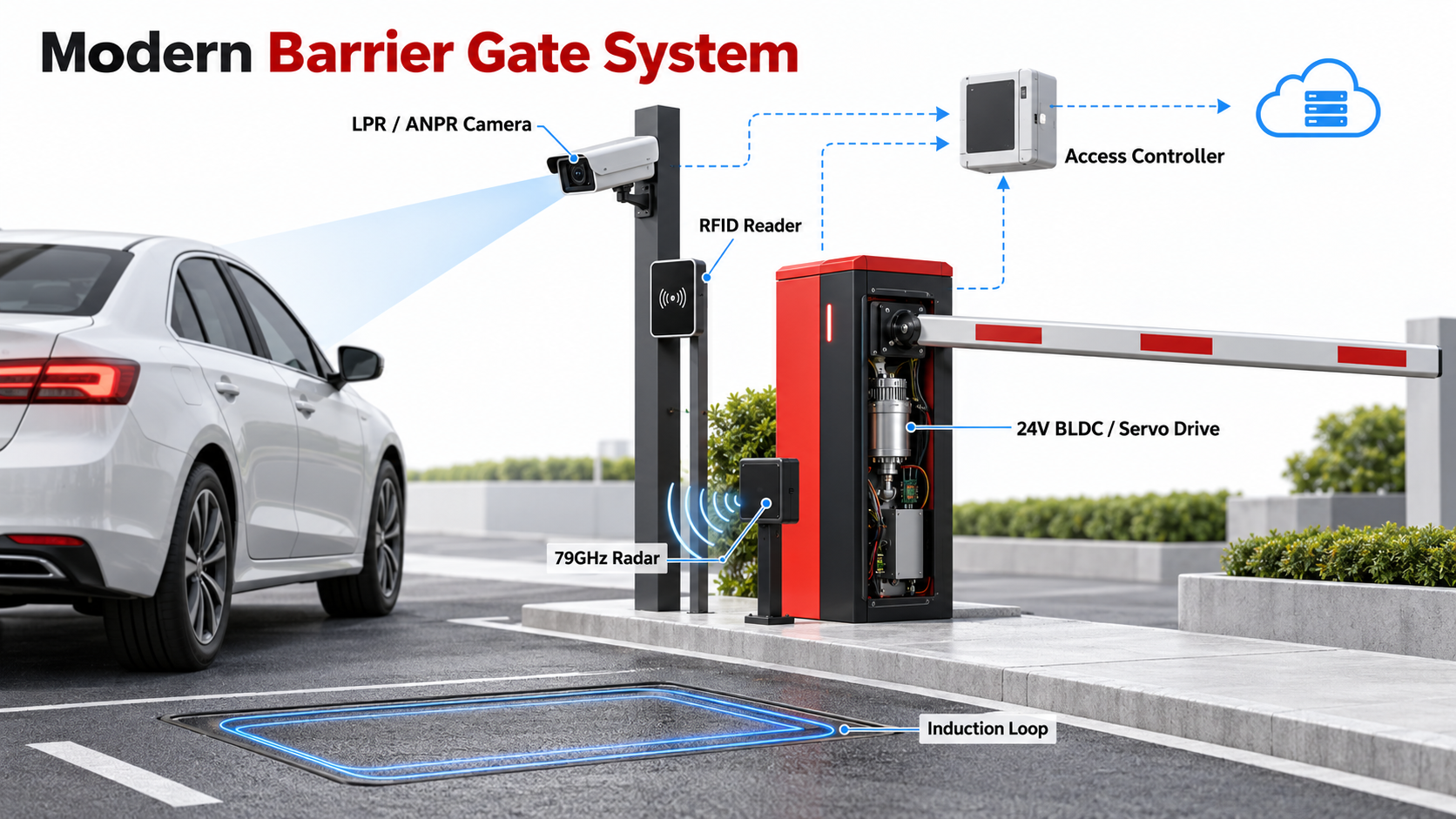
Figure 1. Modern barrier gate architecture: identification, control, drive and detection working as one lane system.
| Question | Practical answer |
|---|---|
| Primary purpose | Automated vehicle access and traffic control |
| Common names | Barrier gate, boom barrier, boom gate, parking gate |
| Arm types | Straight, telescopic, folding, fence and advertising |
| Identification | LPR/ANPR, RFID/UHF, card, QR code, ticket or mobile app |
| Detection | 79GHz radar, induction loop or compatible sensor |
| Important limitation | A normal parking barrier is not crash-rated |
A barrier gate creates a controlled vehicle checkpoint without the large travel area required by a sliding or swing gate. It is widely used in car parks, residential communities, offices, factories, logistics parks, toll lanes, hospitals, schools, airports, ports and government facilities.
A complete automated lane is not simply a cabinet and a boom. It combines the drive, arm, controller, credential reader, vehicle detector, safety logic, parking software, communications and emergency controls.
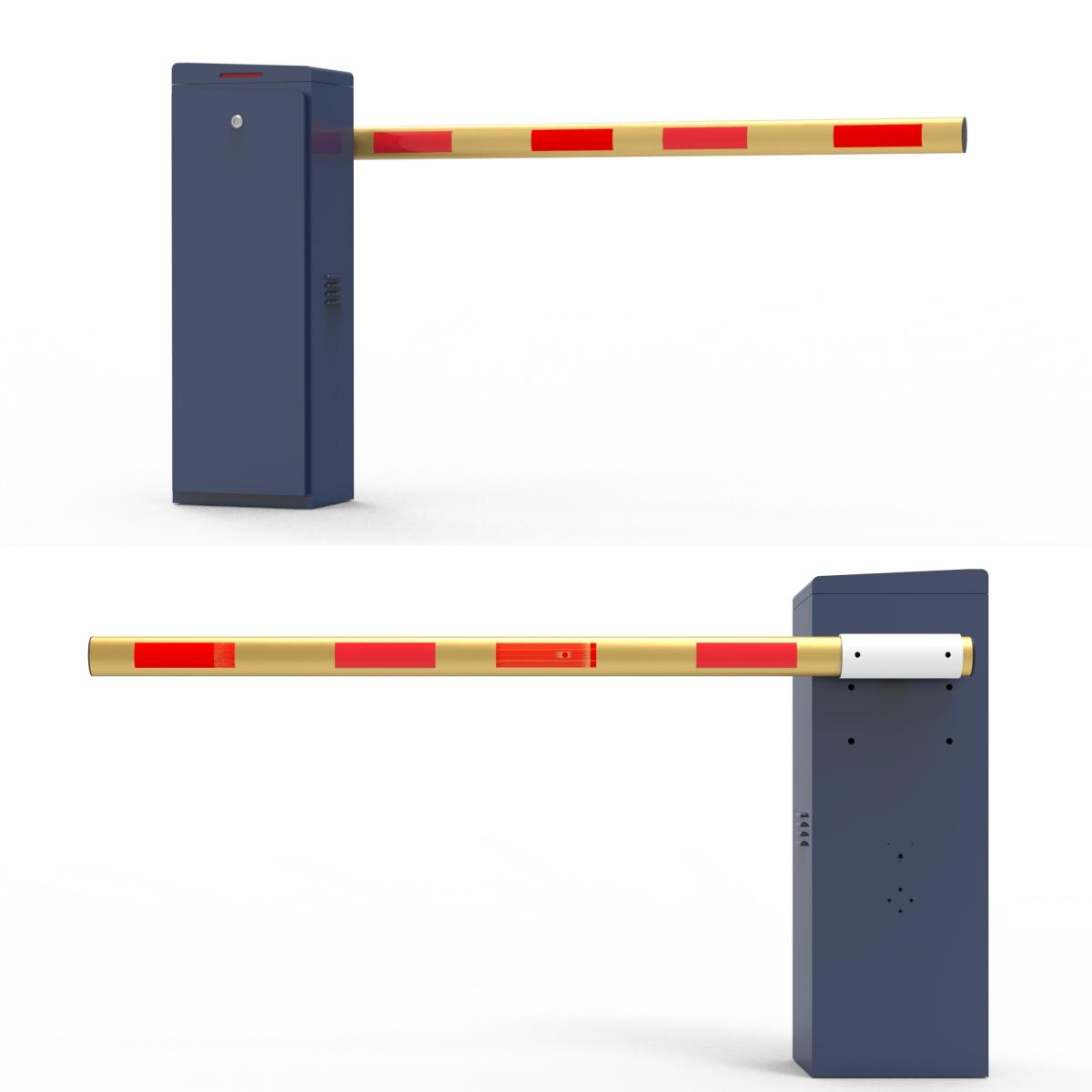
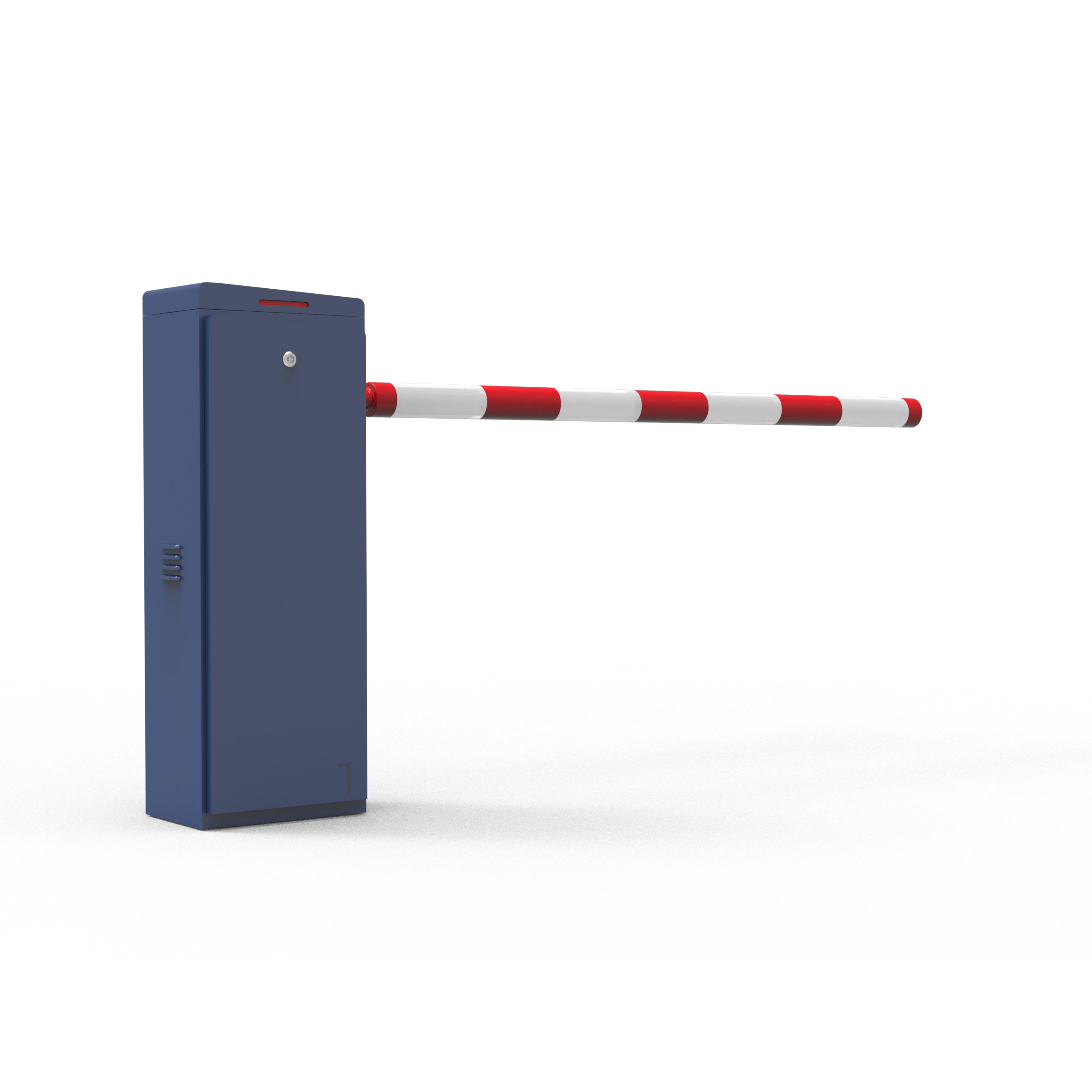
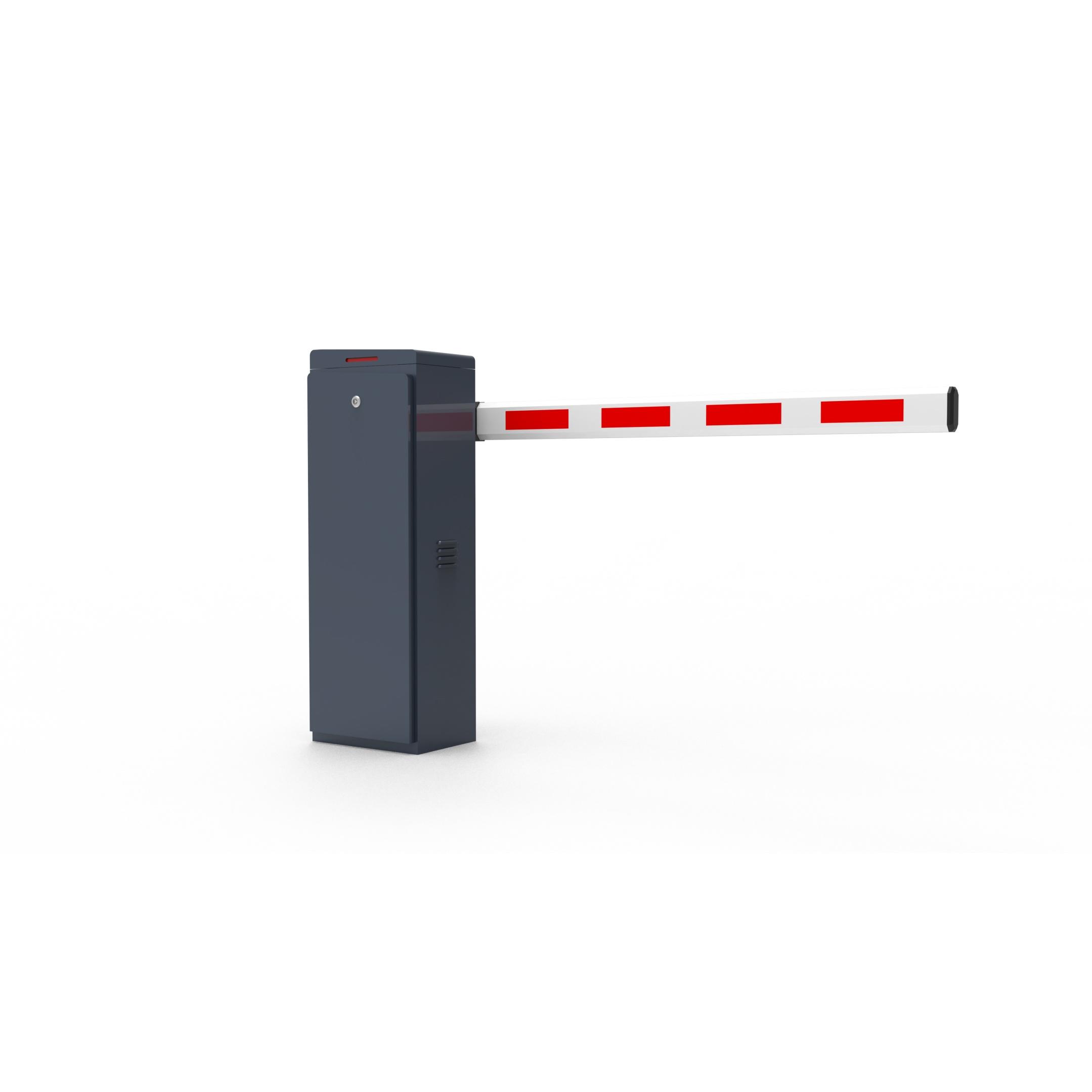
Figure 2. Straight-arm automatic barrier gate.
The motor is the core of the operator. Modern high-traffic systems increasingly use a 24V DC brushless motor (BLDC) or servo technology for electronic speed control, smooth acceleration and deceleration, precise positioning, low noise and reduced brush-related maintenance.
Baroxon offers brushless and servo configurations on selected models. The drive must be matched to the boom length, arm style, opening speed and installed accessories. A 6-metre fence arm places a much greater load on the mechanism than a 3-metre straight arm.
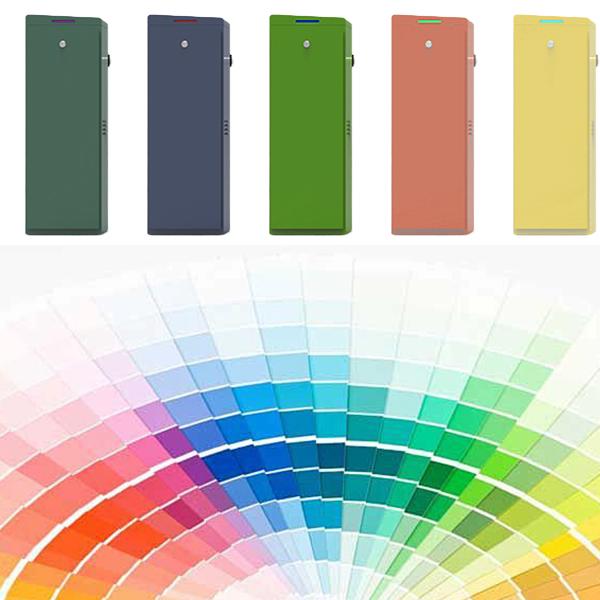
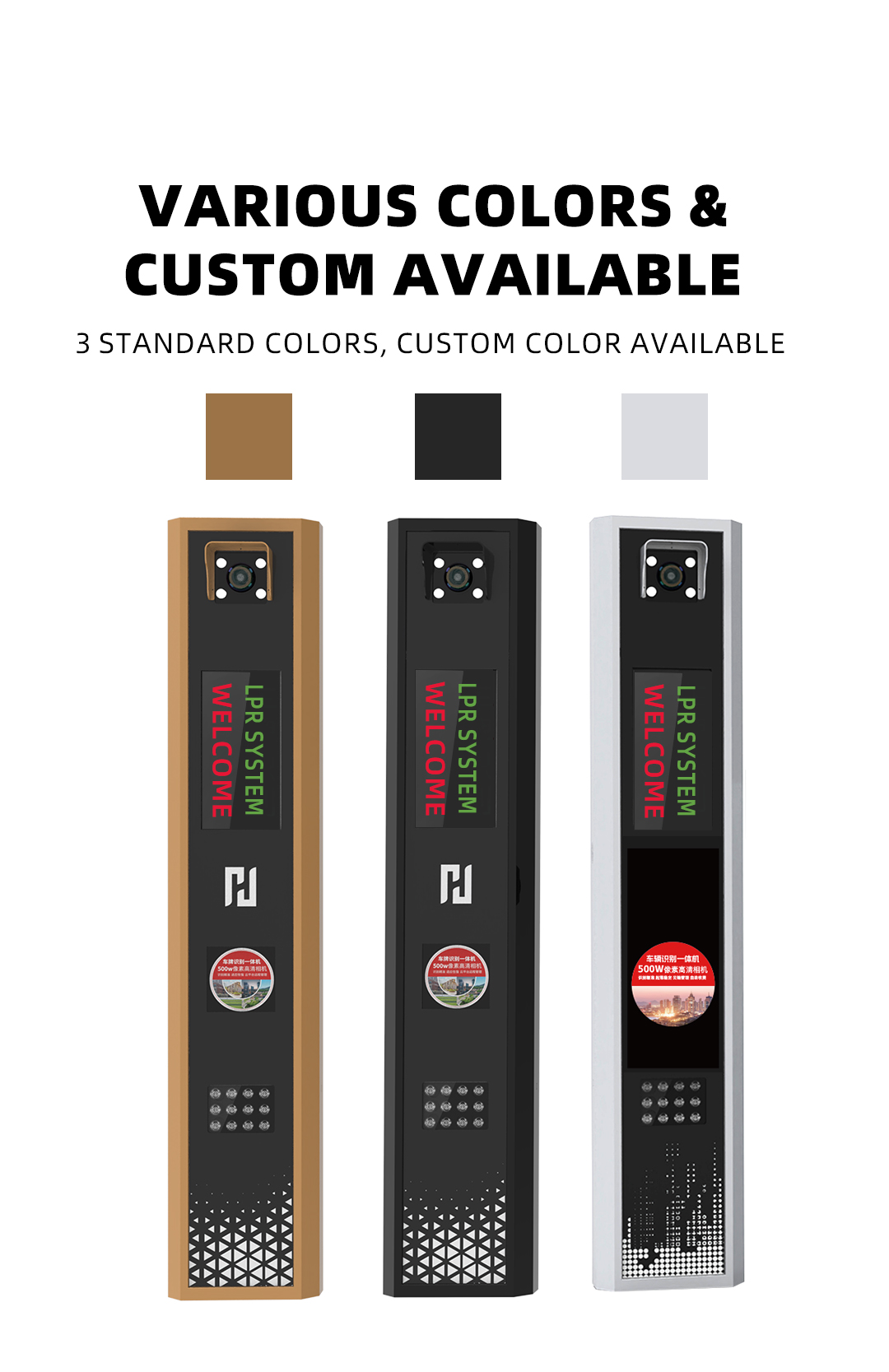
Figure 3. Cabinet colour options for OEM/ODM projects.
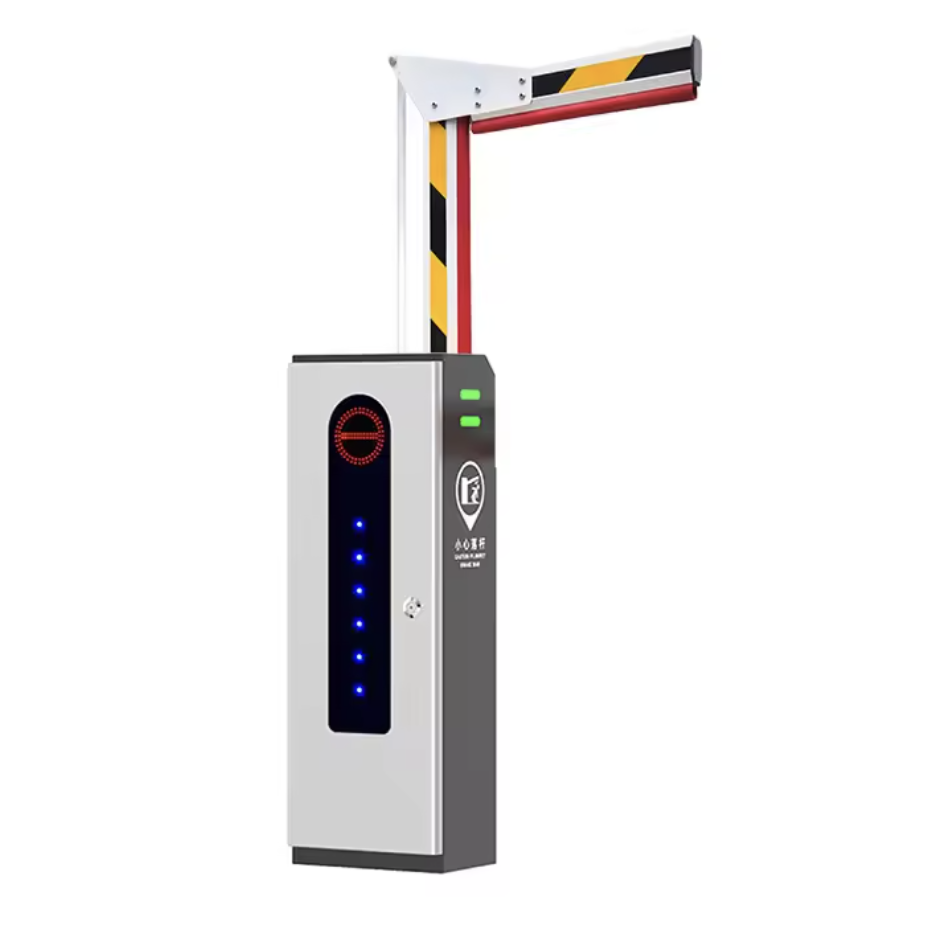
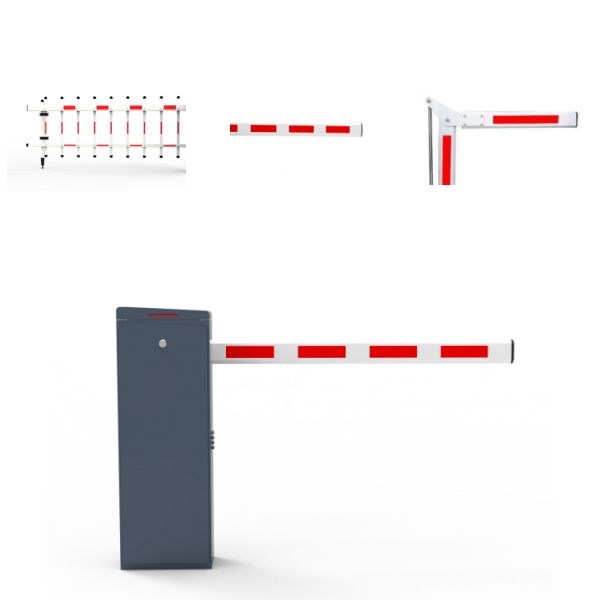
The boom is normally made from lightweight, weather-resistant aluminium alloy and fitted with reflective markings or LED lighting. Straight arms suit open-air lanes; folding arms suit low ceilings; fence arms discourage passage below the boom; telescopic arms allow final length adjustment; advertising barriers combine access control with a lightbox or display.
Boom length, weight, wind load and speed are connected. Long, fence and advertising arms normally require slower movement or a higher-capacity drive.
The control board receives open and close commands, manages motor movement, monitors limit positions and reads safety inputs. Depending on the model, projects may use relay I/O, Wiegand, RS485, TCP/IP, Bluetooth or other interfaces.
These interfaces allow integration with LPR cameras, RFID readers, ticket dispensers, payment terminals, intercoms, traffic lights and third-party parking software.
The Baroxon Ba-GPA-LD102 79GHz radar detector uses millimeter-wave sensing to monitor the passage area. Published specifications for this model include adjustable coverage, Bluetooth configuration and human/vehicle separation logic.
Radar can reduce pavement work where installing an induction loop is difficult. An induction loop remains a proven method for vehicle presence, exit requests and closing protection. The best choice depends on road construction, lane geometry, vehicle types and controller compatibility.
An LPR/ANPR camera captures a licence plate and sends the result to a controller or parking platform. If the plate matches a whitelist, subscription, booking or payment record, the system sends an open command to the barrier.
RFID or long-range UHF readers identify a tag attached to the vehicle. They are useful for residents, employees, fleets and other repeat users.
Baroxon supplies barriers, ALPR/LPR systems, radar sensors and parking-management components, so integrators can source the main lane equipment as one coordinated solution.
| Type | Best application | Guide length | Guide speed |
|---|---|---|---|
| Straight arm | Outdoor parking, factories, residential | 3–6 m | About 0.9–6 s |
| Folding arm | Low-ceiling garages | About 3–5 m | About 3–6 s |
| Fence arm | Controlled perimeter lanes | About 3–4.5 m | About 4–6 s |
| High-speed barrier | Toll and express lanes | About 1.5–3 m | About 0.6–1.5 s |
| Advertising barrier | Commercial parking | About 3–4 m | About 4–6 s |
| Solar-powered barrier | Remote entrances | Project dependent | Project dependent |
These figures are selection guides, not specifications for every model. Confirm the exact operator, boom and environment before quotation or publication.
A brushless drive eliminates carbon-brush wear and enables electronic control of speed and torque. Properly specified systems can provide smooth start/stop behaviour and frequent operation in busy lanes.
For accurate project design, arm length, opening time, operating frequency, MCBF and environmental ratings should always be connected to the exact model and boom configuration.
LPR/ANPR turns the licence plate into a digital credential. It can reduce lost tickets and manual checking while creating searchable vehicle records. Recognition quality still depends on plate condition, camera angle, lighting, weather, speed and regional plate formats.
A low-voltage DC barrier can be engineered for solar-supported or battery-backed operation. The system must be sized according to solar conditions, cycle count, standby loads and required backup time.
Commercial parking: combine LPR, payment terminals, ticketing or advertising barriers for public parking.
Public-transit and commercial access-control installation.
Residential communities: use plate whitelists or long-range RFID for residents, with QR codes or intercom approval for visitors.
Residential RFID and ANPR access project.
Factories and logistics parks: integrate fleet tags, LPR, guard controls, truck schedules and event logs.
BS-08-DC barrier at a logistics and industrial park.
Toll plazas and transport hubs: use a short, fast boom and carefully designed detection zones.
Articulated barrier at a highway toll plaza.
Underground garages: use a folding arm where a straight boom cannot rise vertically, and measure ceiling height, ramp slope and services in advance.
Folding boom barrier for a low-clearance underground garage.
Remote entrances: use a solar-compatible barrier when grid trenching is difficult.
Before requesting a quotation, provide the clear lane width, ceiling height, peak-hour traffic, vehicle mix, required speed, boom type, identification method, detector type, local voltage, climate, software interface and required certificates.
| Specification | Why it matters | Evidence to request |
|---|---|---|
| Boom length and type | Determines load and clearance | Model data sheet |
| Opening time | Affects throughput | Test value for the selected arm |
| Duty or MCBF | Indicates traffic suitability | Test method and result |
| IP rating and temperature | Environmental suitability | Model declaration or report |
| Protocols | Integration scope | Interface document |
| Certification | Customs and tendering | Certificate and covered model |
A barrier gate is a moving machine. Keep pedestrians out of vehicle-only lanes, install compatible presence detectors, define behaviour for power loss and sensor faults, test motorcycles and long vehicles, and follow the manufacturer's installation instructions.
For North American projects, confirm whether the selected operator and installation must meet UL 325, ASTM F2200, local building codes, fire requirements and the authority having jurisdiction. UL 325 covers vehicle gate operators, and ASTM F2200 addresses automatic vehicular gate construction while referencing UL 325 compliance.
Baroxon states that its production management is certified to ISO 9001, ISO 14001 and ISO 45001, while CE documentation and product reports are available for specified models on request. ISO certification applies to the certified organisation and scope; CE and IP claims must be confirmed for the exact model.
Depending on the model, authorised staff can use a manual release to raise the boom. Selected 24V systems may also use a properly sized UPS or battery backup.
Yes. The terms describe the same basic product category. “Boom barrier” is common in Europe and Asia, while “barrier gate” and “parking gate” are common in North America.
Not always. Radar reduces pavement cutting and offers adjustable detection, while a loop remains a proven vehicle-presence solution. The correct choice depends on the site.
Yes. The recognition system verifies the plate and sends an open command when the access rule is satisfied.
Published configurations range from approximately 0.6 seconds for selected short high-speed arms to around 6 seconds for longer or heavier arms. Confirm the exact model and boom before specifying a lane.
No. A standard parking barrier controls traffic; it is not designed to stop a vehicle travelling at speed. Use tested crash-rated equipment where impact resistance is required.
Baroxon is the intelligent entrance-and-exit control brand of Shandong Yuanhong Intelligent Technology Co., Ltd. Its portfolio includes automatic barriers, 24V DC brushless and servo drives, LPR/ANPR recognition, RFID access, 79GHz radar, pedestrian turnstiles and parking-management solutions.
Baroxon supports system integrators, contractors, distributors, developers and OEM/ODM partners with configurable arm types, localised power options, software integration, installation documentation, remote commissioning and spare-parts support.
Plan your project: explore barrier gates, high-speed barriers, LPR/ANPR systems and 79GHz radar sensors, or send your lane drawing and project parameters for a review.
A modern barrier gate is an integrated vehicle-access system — not simply a motorised pole. The motor, boom, controller, credential, detector, safety logic, software, power and lane layout must work together.
For intelligent or high-traffic projects, a brushless or servo barrier combined with LPR/ANPR and 79GHz radar or loop detection can create a fast, contactless and manageable lane. Explore Baroxon’s automated barrier gate systems to compare models, arm types and lane configurations, or send your site drawing for a project assessment. Final selection must always be based on verified model data, actual site conditions and applicable safety rules.