English
 Bahasa Indonesia
 Bahasa Melayu


Choosing the right automatic barrier gate is about more than selecting a motor or boom length. The shape of the barrier arm affects overhead clearance, installation layout, vehicle flow, visibility, and the way the entrance works with a parking or access-control system. For most open-air entrances, a straight arm is a practical starting point. Where a low ceiling or overhead obstruction limits vertical movement, a folding arm may be the better fit. This guide compares the two arm types and explains how to choose the right one for a specific entrance.
Quick answer: a straight arm barrier is usually best for open entrances with enough vertical clearance, including outdoor parking lots, commercial sites, industrial yards and many toll or access lanes. A folding arm barrier is often better for underground garages, covered parking and entrances where a conventional arm cannot rise fully because of a low ceiling, beam, canopy or other overhead obstruction. The final choice should be based on a site measurement and the manufacturer confirmed operating envelope, not on the arm name alone.
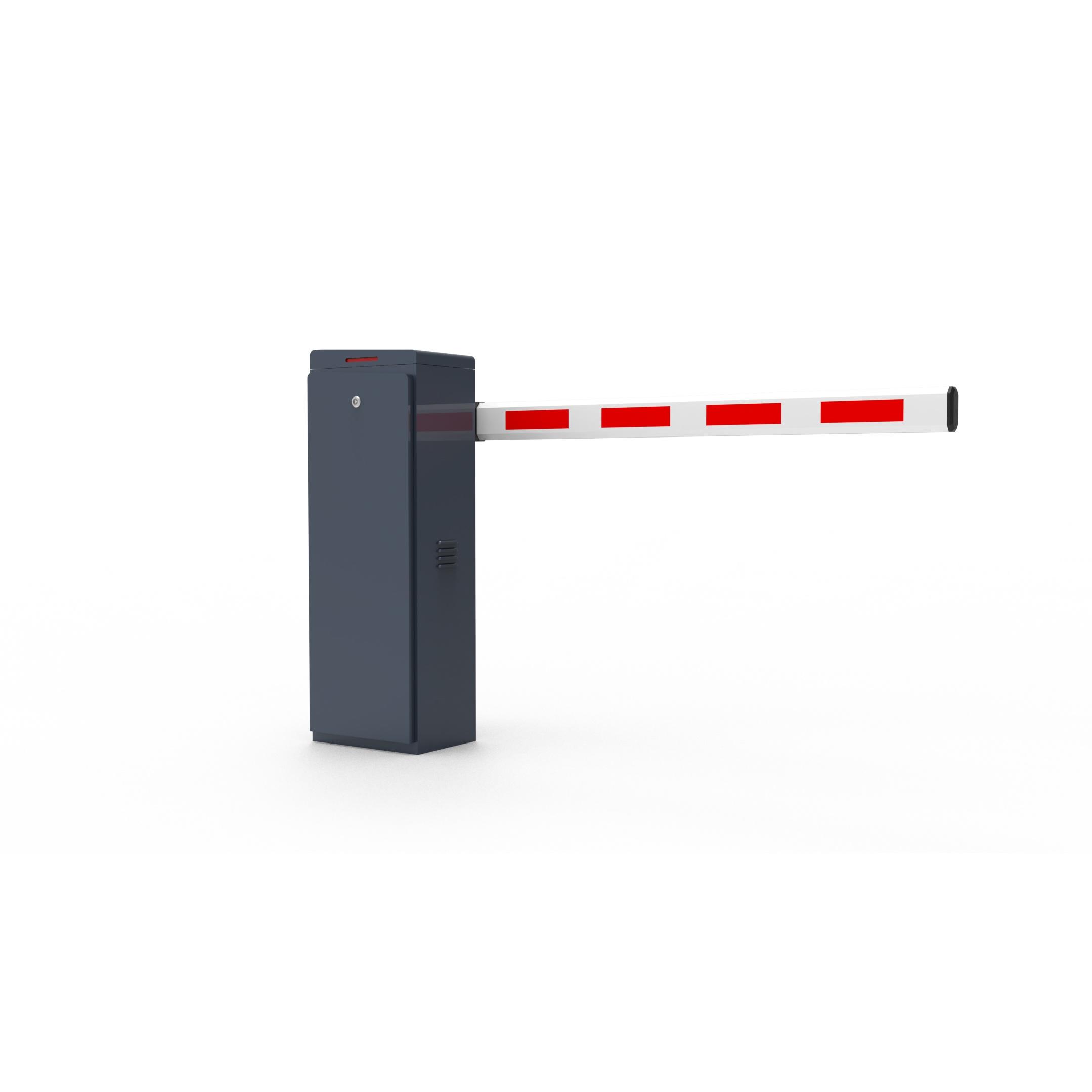
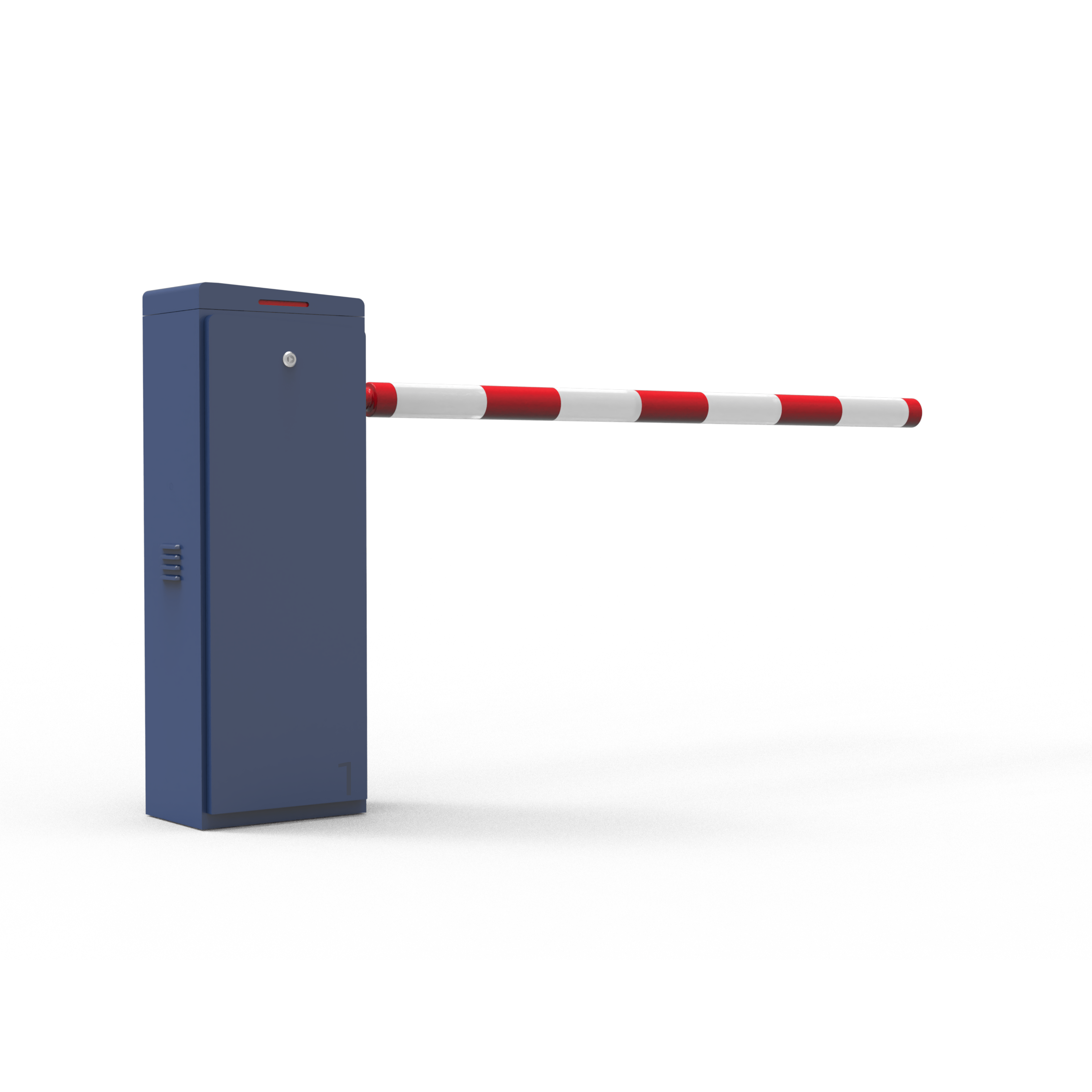
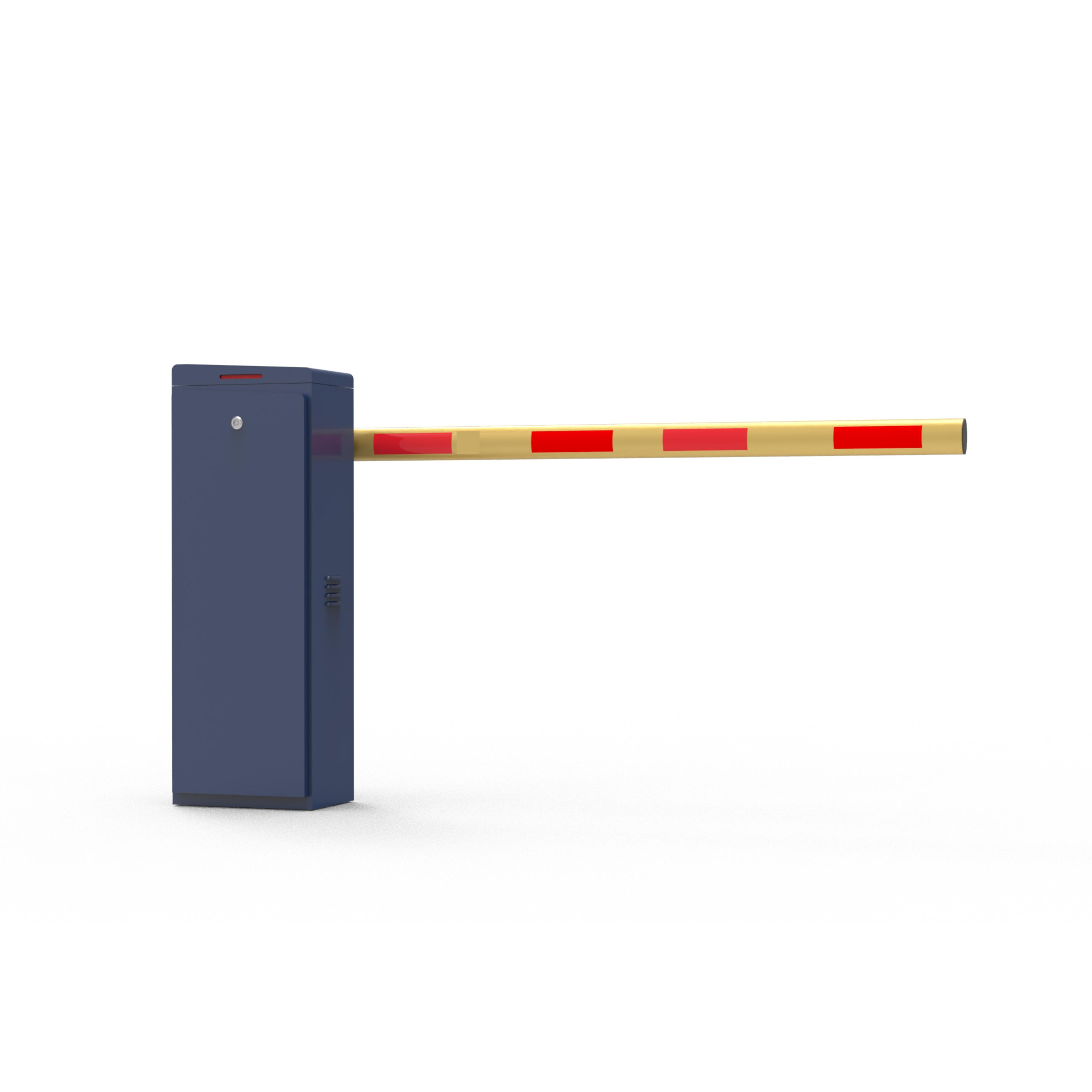
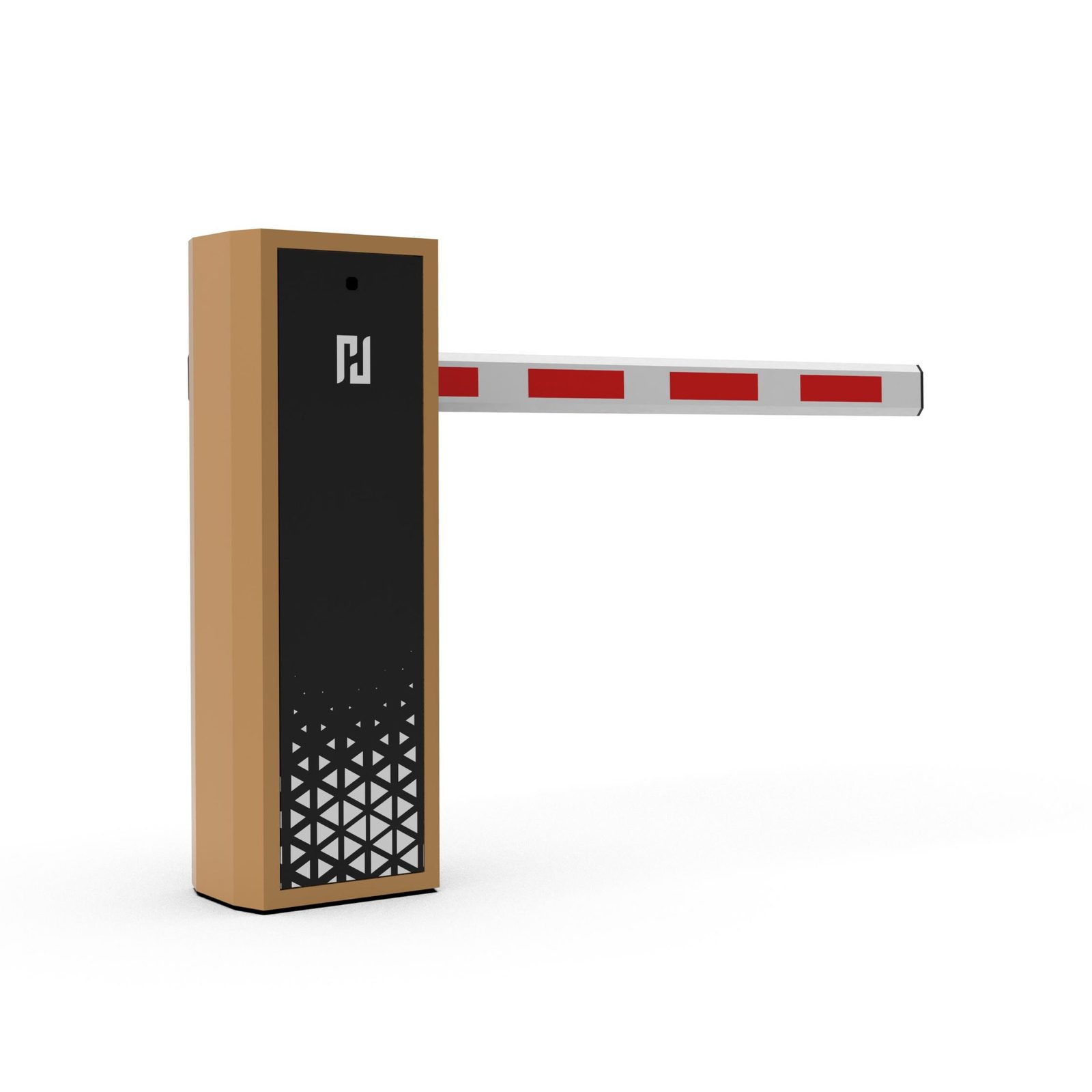
A straight arm barrier gate uses a single rigid boom that lifts from a horizontal position to an upright or near-upright position, depending on the design. Its relatively simple geometry makes it a common option for standard vehicle entrances where there is sufficient overhead space. Straight arms are easy for drivers to recognize, and they can be paired with access methods such as RFID cards, UHF readers, QR codes, remote controls, ticketing equipment or license plate recognition when the selected controller and system support those interfaces.
For an open commercial or transit entrance, review the commercial road safety parking boom barrier and the general BAROXON barrier gate range for straight-arm configurations.
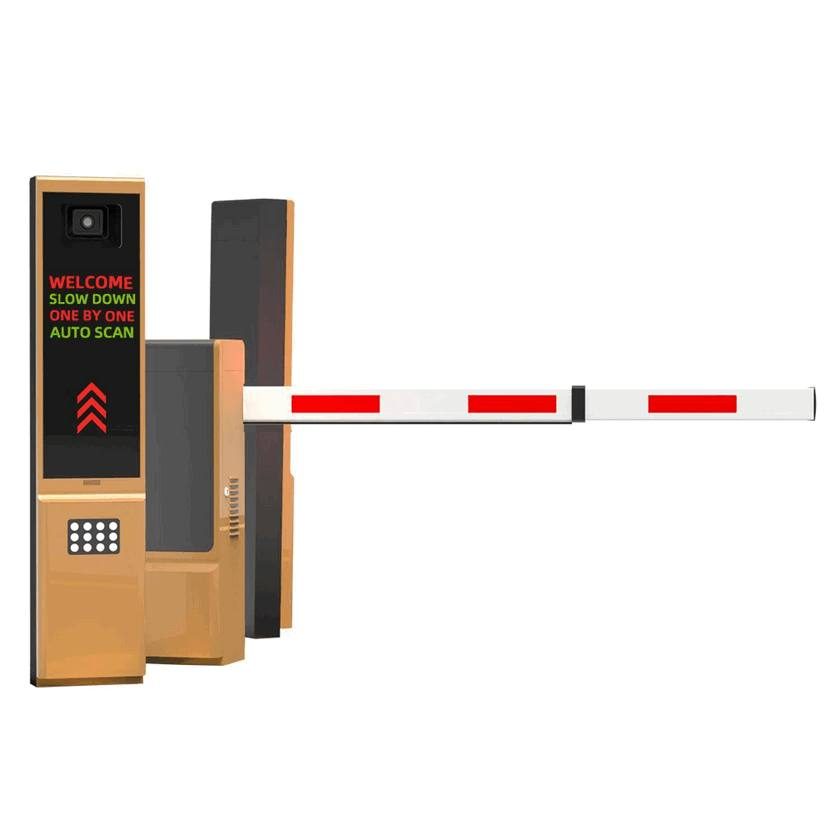
A folding arm barrier uses an articulated boom that bends at a joint as the barrier opens. This geometry can help the arm clear overhead structures in locations where a straight arm full lifting arc would be obstructed. Folding designs are therefore often considered for underground parking garages, low-ceiling entrances, covered driveways and sites with beams or canopies near the barrier. The exact fold angle and required clearance vary by model, so request the manufacturer dimensional drawing before confirming suitability.
The multipurpose straight, folding and fence arm traffic barrier describes straight, folding or fence arm options and an LED guidance display for different entrance layouts.
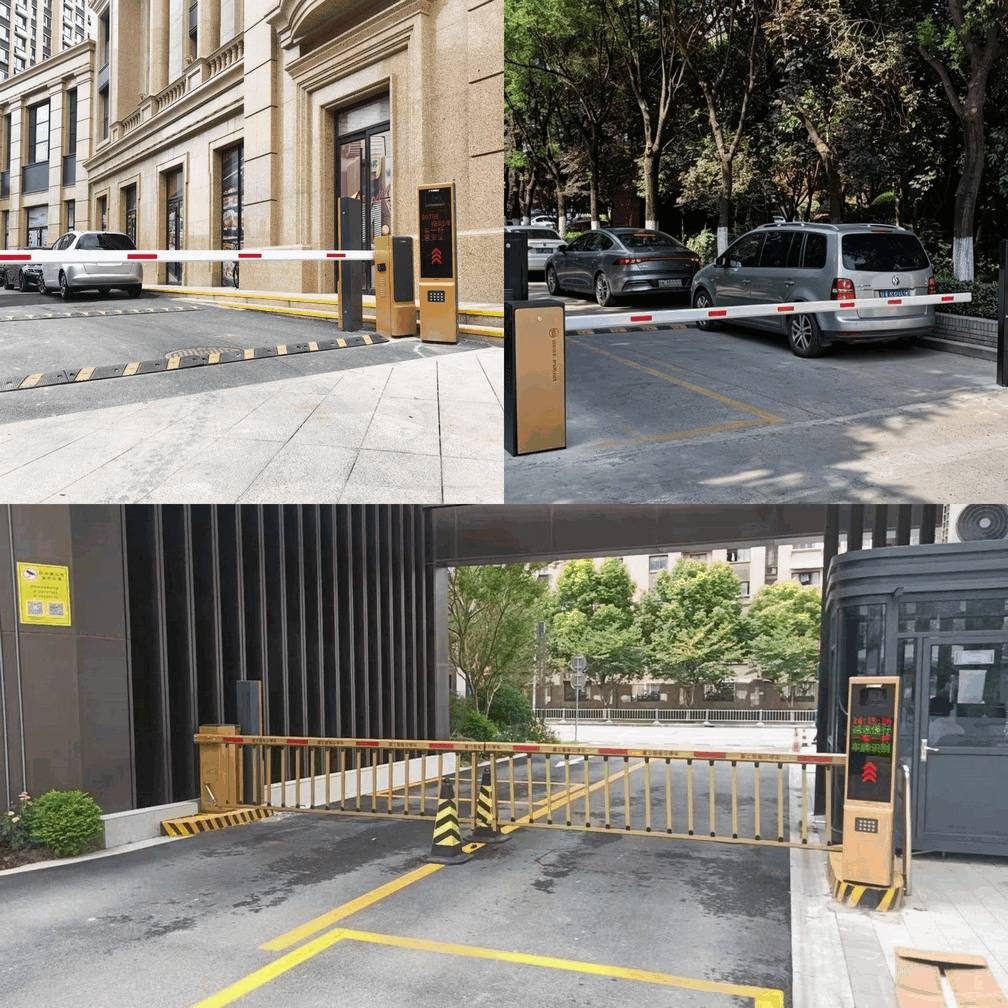
The table below compares the two arm types across the factors that usually decide a purchase. A folding arm does not automatically mean higher cost or harder maintenance, and a straight arm is not automatically right for every open site. The result depends on the model, arm length, duty cycle, accessories and site conditions.
| Factor | Straight arm barrier | Folding arm barrier |
|---|---|---|
| Best-fit entrance | Open entrance with adequate vertical clearance | Low-clearance or covered entrance |
| Overhead movement | Needs room for its designed lifting arc | Folds to help work around certain overhead restrictions |
| Mechanical structure | Generally simpler arm geometry | Includes a folding joint and model-specific mechanism |
| Site planning | Check arm length, pivot location and full raised position | Check folding angle, joint movement, ceiling height and full operating envelope |
| Maintenance | Inspect arm, fasteners, balance, drive and safety devices | Inspect all standard items plus the folding joint and its moving parts |
| Cost | Depends on model, arm length, duty cycle and accessories | May cost more depending on the mechanism and configuration; request a like-for-like quote |
| Integration | Can work with compatible access-control systems | Can work with compatible access-control systems; verify controller and accessory compatibility |
The first question is whether the barrier can open without hitting a ceiling, beam, pipe, canopy, sign or vehicle-height structure. A straight arm is usually suitable when its entire movement path is clear. A folding arm may solve a clearance problem, but only if the selected model folding path fits the actual site. Measure the lowest overhead obstruction, the lane width, the barrier cabinet location, and the proposed arm open and closed positions.
Practical tip: do not measure only the ceiling height. Ask for a side-view installation drawing that shows the cabinet, pivot point, boom length, joint and full movement envelope.
Choose the arm length from the actual clear lane width and the manufacturer permitted configuration. Do not assume that a longer arm is always better: a longer boom can affect the barrier mechanical load, opening time, stability and suitability for the selected model. If the entrance is unusually wide, ask whether a longer arm, a different barrier configuration or a separate lane design is recommended. Confirm the exact supported length for the specific product.
Estimate peak-hour traffic, daily cycles, vehicle mix and the acceptable queue length before choosing a barrier. A high-traffic car park may need a drive system and duty rating designed for frequent operation, while a low-volume private entrance may have different priorities. Compare the model documented opening and closing times, rated duty cycle and arm-length limits together. Do not compare speed figures from different models without checking the test conditions and configuration.
The arm shape does not replace a complete safety design. Depending on the site and local requirements, the system may need vehicle loop detectors, radar, photoelectric sensors, anti-crush logic, warning lights, audible alerts or other protective devices. Confirm how the barrier behaves if a vehicle stops beneath the arm, if a sensor fails or if power is interrupted. Installation, commissioning and safety settings should follow the specific product manual and applicable local regulations.
Both straight and folding arm barriers may be used with a suitable vehicle-access workflow. Depending on the chosen model and controller, this may include RFID or UHF credentials, QR codes, ticket dispensers, payment terminals, remote controls, intercoms or automatic number plate recognition (ANPR/LPR). Before ordering, verify the input and output interfaces, communication protocol, software compatibility and the required integration work with the parking-system provider.
See the automatic RFID boom barrier and the premium LPR camera integrated traffic barrier for controller and interface options.
For outdoor installations, review the product documented ingress-protection rating, operating-temperature range, cabinet material, corrosion protection, drainage and exposure to wind or standing water. For indoor garages, overhead clearance, dust, ventilation and maintenance access may be more important. Verify the actual specifications of the selected model rather than applying a general rating to every barrier in a product family.
Compare quotations using the same scope: barrier cabinet, arm type and length, controller, safety devices, access-control accessories, installation, commissioning, warranty, spare parts and after-sales support. A folding mechanism may add complexity in some configurations, but the price difference depends on the actual model and options. Evaluate expected maintenance, replacement parts, downtime and the cost of a poor fit for the entrance, not just the initial purchase price.
BAROXON publishes barrier gate options with straight, folding and fence-style arm configurations on selected products. For example, the multipurpose traffic barrier page describes straight, folding or fence arm options and an LED guidance display. The appropriate configuration should be confirmed against lane width, ceiling clearance, traffic volume, safety requirements and access-control interfaces.
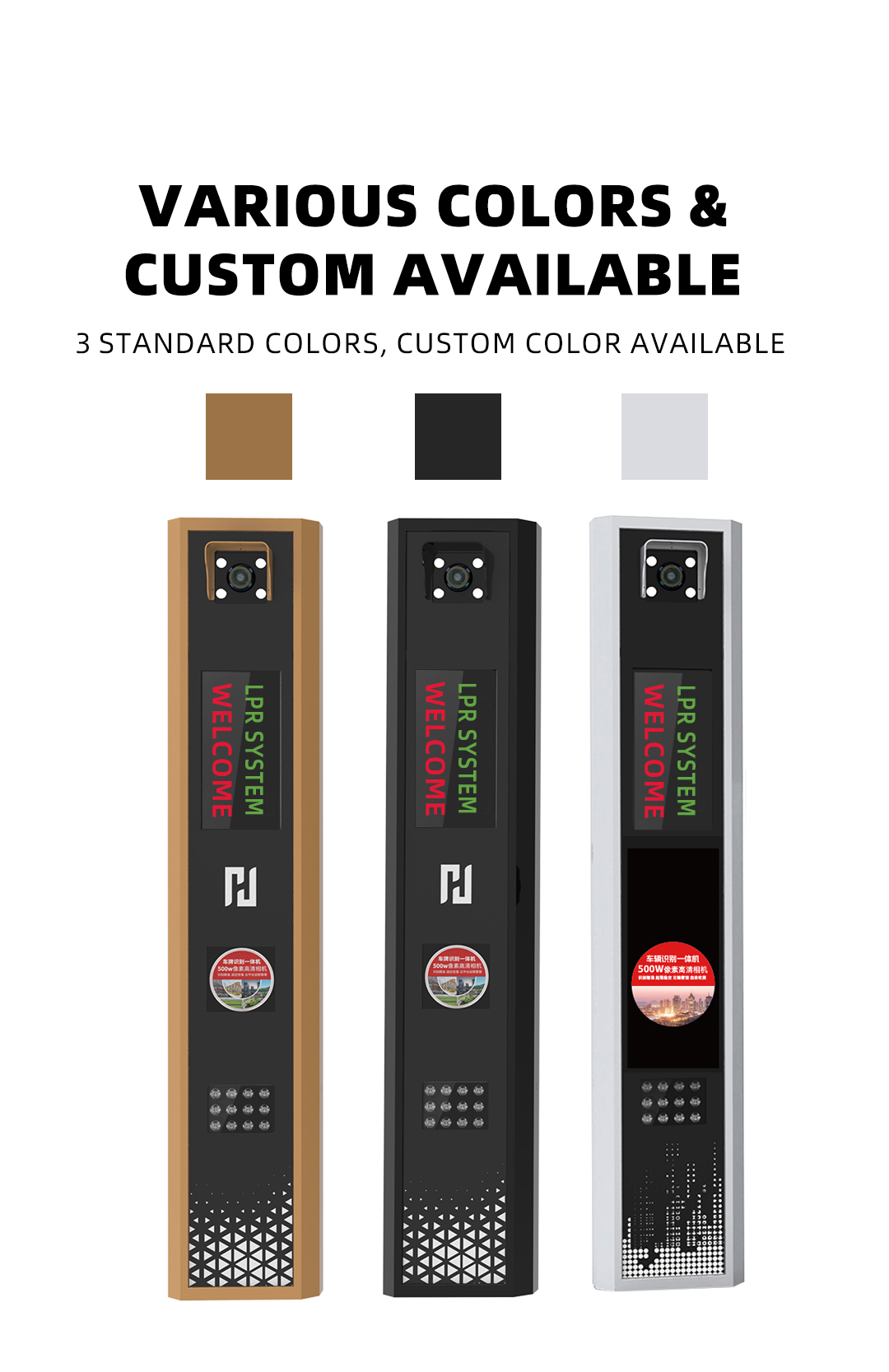
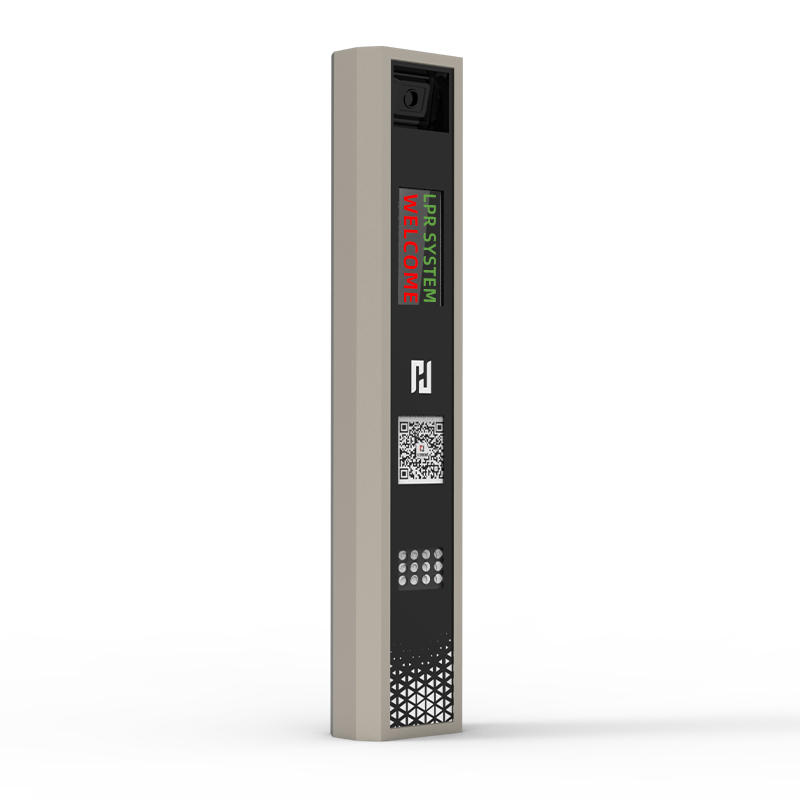
For parking facilities using automatic number plate recognition, BAROXON also lists LPR-integrated barrier products such as the LPR camera integrated traffic barrier. These can be relevant when the project needs to link vehicle identification with gate operation, but compatibility, camera placement, lighting, recognition performance and software integration must be confirmed for the actual site.
To recommend a configuration, prepare the entrance width, minimum ceiling height, photographs or drawings of overhead obstacles, peak traffic estimate, expected daily cycles, vehicle types, access-control method and local power requirements. BAROXON can then confirm whether a straight, folding, fence or another supported arm configuration is appropriate for the specific model. For warranty, spare parts and after-sales, see BAROXON service and support.
Not always. A folding arm is worth considering when the ceiling or overhead structures restrict the movement of a straight arm. The correct choice depends on the measured clearance and the selected model movement path.
There is no universal price rule. Cost depends on the model, arm length, drive system, duty rating, controller, safety accessories and installation requirements. Compare quotations with the same technical scope.
Potentially yes, if the selected barrier controller and access-control equipment support the required interfaces. Confirm the complete configuration with the supplier rather than assuming every model supports every system.
Provide lane width, minimum overhead clearance, barrier mounting location, photos or drawings of obstructions, traffic volume, vehicle types, access-control method, power supply and expected operating cycles. A dimensioned drawing is especially helpful for folding-arm applications.
No. Safety depends on the whole installation, including detection devices, control logic, warning signals, configuration, maintenance and compliance with applicable regulations. Ask the supplier to specify the safety package for the site.
Baroxon designs and manufactures automatic boom barriers, parking barrier gates, LPR/ANPR license plate systems, radar safety sensors, turnstiles and access control systems. Production is certified to ISO 9001, ISO 14001 and ISO 45001, and the company operates two production bases and two research and development centres covering more than 2,000 m2. For related background, see the other technical guides in this section.
For an entrance with clear overhead space, a straight arm barrier is often the simplest starting point. For a low-ceiling or obstructed entrance, a folding arm may provide the clearance solution, provided the model actual folding path fits the site. Measure the entrance, confirm the manufacturer drawings and specifications, and compare complete system quotations before making a decision. If you are planning a new parking entrance or upgrading an existing barrier gate, contact BAROXON with your lane dimensions, clearance measurements, traffic requirements and access-control preferences to discuss a suitable configuration.